Automotive IT is SO complex
A common phrase about automotive IT is that it's is so complex. I am here to set things straight.
Tero
1366 6 Minutes, 12 Seconds
2026-03-07 17:10 +0200
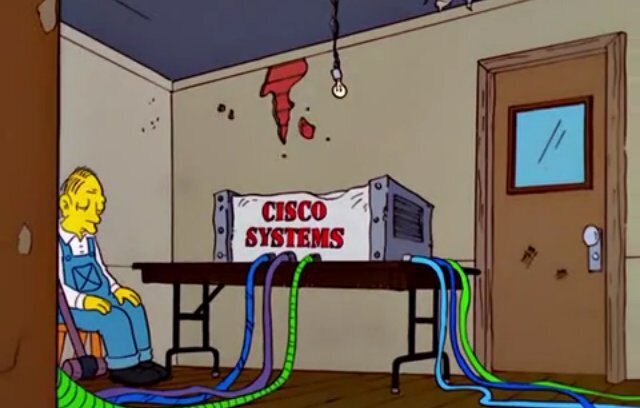
Getting things straight
Whenever I hear the phrase that’s this post’s title, I cannot help but step in. Automotive dealership it is NOT complex by any measures. It SEEMS complex by wide spread and institutionalized fragmentation. In this blog post I will explain why, in detail.
I am not totally sure if that phrase is heard around other dealerships as much as I’ve heard it in ours over the years I’ve spent here, but talking to colleagues seems very much like it is. Non-technology oriented C-levels are the ‘culprit’ of spreading these ‘rumours’ about automotive IT complexity. As I see this, this is not boiling from the lack of their technological knowhow, but something more deeper and institutional.
The complexity paradox
See, I know the industry standards for automotive IT with over 13 years of IT operations in a dealership which does not only sell cars but is also an OEM-authorized workshop. I’ve had the privilege of having a front-row seat on seeing how different OEM’s from across the world operate.
I am not here to bash on OEM’s or the industry at all. The truth of the matter is that automotive IT systems are for the most part old and legacy. The industry standard seems to be that the underlying systems are ran for decades without major overhauls and the modern functionalities are brought in by adding new layers on top of the crumbling foundation. To be frank, somebody ought to take a bottle jack, take the time to fix the foundation and then continue building new things on top. Case example, we are an authorized workshop for a major OEM that still, in 2026, requires using all of their internal tools with an Internet Explorer compatibility layer.
IT in automotive is a relatively new thing compared to a lot of other business sectors. The end product, a car, has remained largely unchanged for decades and that’s why automotive IT feels and for the most part is old and legacy. Whilst the world was introduced to connected fridges, smart TV’s, BLE toothbrushes and smartphones, the car stayed the same: engine, transmission, differential, axles, steering wheel and a gear stick. The end product was built to serve its purpose: getting people from point A to point B and occasionally point C. It was hard to see the added value of integrating a car to the internet.
Then, came a man from South Africa who not only bottle jacked the industry but took a wrecking ball and started vaporizing a large part of the industry. The end result, a Tesla car, marks a major shift for the industry. For years, Tesla remained a laughing stock of the industry - mostly viewed as a prototype car with no real future in sight. But why I view Tesla as the pioneer of modern car industry is that they worked on a lot of features that the customers didn’t know they wanted before they got access to them. Tesla made their customers want to view their car as more than just a means to get from point A to B: a natural extension to their smartphone and other connected devices. Why they managed to pull this off is, and this is my personal opinion, is that they weren’t bound to industry standards. The ‘Apple-philosophy’ of product development paired with a visionary did recreate the product development pipeline for cars.
One of the things I’ve enjoyed the most in viewing from inside the car industry is the unexpected shift Tesla started and how it affected and still affects giant established OEMs. I joined the automotive sector in 2012 when Tesla was still very much viewed as the experimental EV without the means to become anything more than a slight curve on their path. But with Tesla paving the way of how a connected car should look and feel like, we started seeing the industry giants picking up speed. The old unshakeable giants started stuttering like nervous 4th graders and dumping money into developing their own version of a connected car and their line of EV’s. This in turn shortened QA-pipelines and resulted in OEMs pushing out new models to the roads faster than ever. This, in my own personal view, has degraded the customer experience of owning and operating a car.
A quick, major, and honestly unexpected shift happened almost overnight. Established OEMs started shortening their QA cycles just to push new models out faster. That works fine in the smartphone world — people tolerate quirks because updates can fix everything later. But with cars, it’s a different ballgame entirely. The industry is still very much learning what it means to ship a rolling computer.
I know this is a controversial view, but I think Tesla made a hugely larger impact on the foundations of the car industry than any of the other OEMs dared to think or plan for. I will also point out that I am not a Tesla fan. But I am a fan of the way Tesla managed to shake up a very well established industry. This exactly something that a lot of other industries in the world we live in would benefit greatly from.
This makes us circle back into the IT in the automotive industry. While the products OEMs are racing to produce cutting edge end products, their internal IT - from a dealers perspective - is trying to keep up with the pace and is not always on par. This, unfortunately, often leads to a fragmented IT environment where the backend (foundation) cannot always keep up with the fast paced development of the end product.
And this, in my view, creates the faux impression of super-complex systems where old legacy is mixed in with new layers of the applications. This happens throughout the whole supply chain of automotive IT, all the way from OEM down to the dealership level. This in itself cannot, again from my view, viewed as complexity. This is the ultimate definition of unhealthy system fragmentation. And the only way to fix this is by building a solid foundation.
Whenever I overhear a conversation about the complexity of IT in automotive, I recommend them visiting a manufacturing business - that’s complex IT for you. And that’s complexity by necessity, not the end result of a speed run in product development.
How automotive IT should be viewed and acted on
Even though the industry has been teetering on the edge of a major shift, people responsible for automotive IT should not fall back as bystanders. You have the means to turn a fragmented system in your own favor.
The core of IT, regardless of the industry, is very simple. You are delivering services and/or products to your users and the company’s customers. Nothing else should matter. Nearly every business that’s selling and maintaining products built by another company has to conform to the manufacturers requirements - in some form or another. Needing to align with these requirements should never be the driving factor of how the company’s IT is structured and managed.
For example: if you’re bound to operate a legacy ERP because of OEM requirements, that’s a boundary you have to operate within. That’s not the whole playbook. Your job, as the sysadmin/developer/IT manager/whatever, is to make the best out of that situation. You can build tools or have tools built on top of the ERP backbone.
Focus your efforts where they count: if OEM system topology is fragmented and all over the place, make sure your own company’s IT is organized. Stop blaming yourself, the OEMs or your team. The boundaries are not set by you or your team. Make changes one at a time and monitor the results, learn from them and make adjustments. If your internal IT is a fragmented mess, document it to it’s full extent with all the flaws and the quirks. There’s your playbook: take flaw one, preferably something that’s a low-hanging fruit, fix it, monitor and realign your documentation. Before long you’ve aligned your responsibilities to best practices. That’s a great place to build on.
Automotive IT isn’t complex — it’s just fragmented. And fragmentation isn’t destiny. It’s something you can work through systematically.